Optimizing a Media Budgeting Workflow
Research | User Testing | Prototyping | Enterprise UX
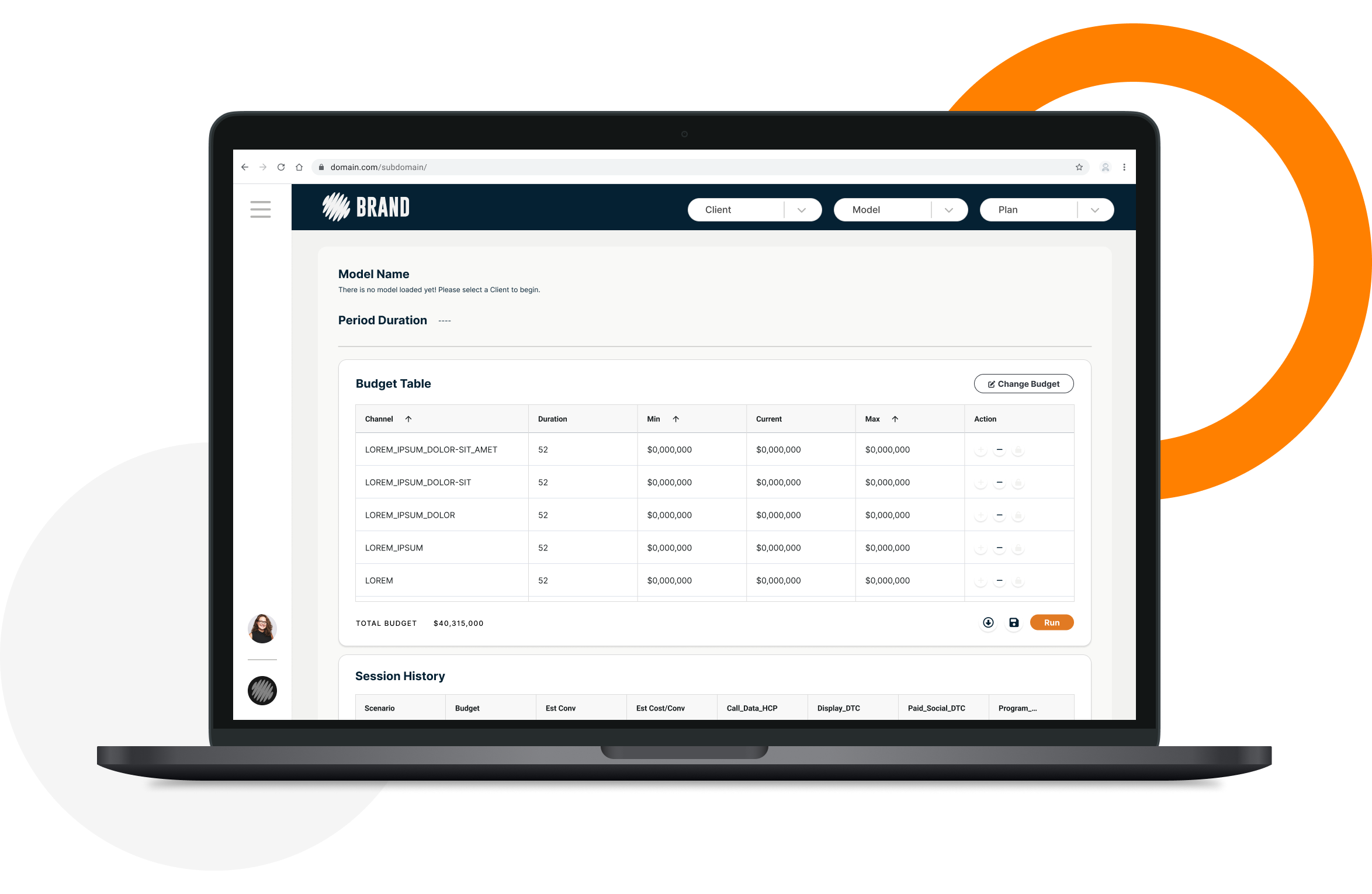
This project focused on improving a complex budgeting and scenario-planning workflow within an internal media mix modeling platform. The tool supported teams in simulating and comparing media investment strategies, but its growing complexity created friction that limited adoption and scalability.
My goal was to reduce cognitive load, improve clarity across multi-step workflows, and establish a design foundation that could support broader internal adoption, and eventually external use, without disrupting ongoing development.
The Challenge
Users need to simulate and compare media investment scenarios, but the budgeting experience requires navigating dense information, unclear task sequencing, and inconsistent terminology. This increases cognitive load, slow decision-making, and forces users to rely on workarounds outside the product.
My Role + Scope
As Lead Product Designer, I collaborated closely with the Senior Product Manager, Principal Engineer, and analytics stakeholders throughout discovery, design, and delivery. Together we defined project scope, prioritized features, and iterated on solutions to ensure the final designs met both business objectives and data-driven requirements.
Approach
Evaluative & Generative Research
I began with a heuristic evaluation of the core budgeting and scenario-planning workflows to identify patterns contributing to friction, confusion, or error-prone behavior. This surfaced systemic issues around hierarchy, labeling, and task sequencing rather than isolated UI problems.
To deepen understanding, I facilitated cross-functional workshops with stakeholders to align on:
How teams intended the workflow to function
Where real-world usage diverged from that vision
Dependencies that would influence future scalability
I complemented this with usability studies involving team members with varying levels of expertise in the existing platform and in role ranking. This helped distinguish between issues caused by complexity of the domain versus those introduced by the interface itself.
Design Strategy & Iteration
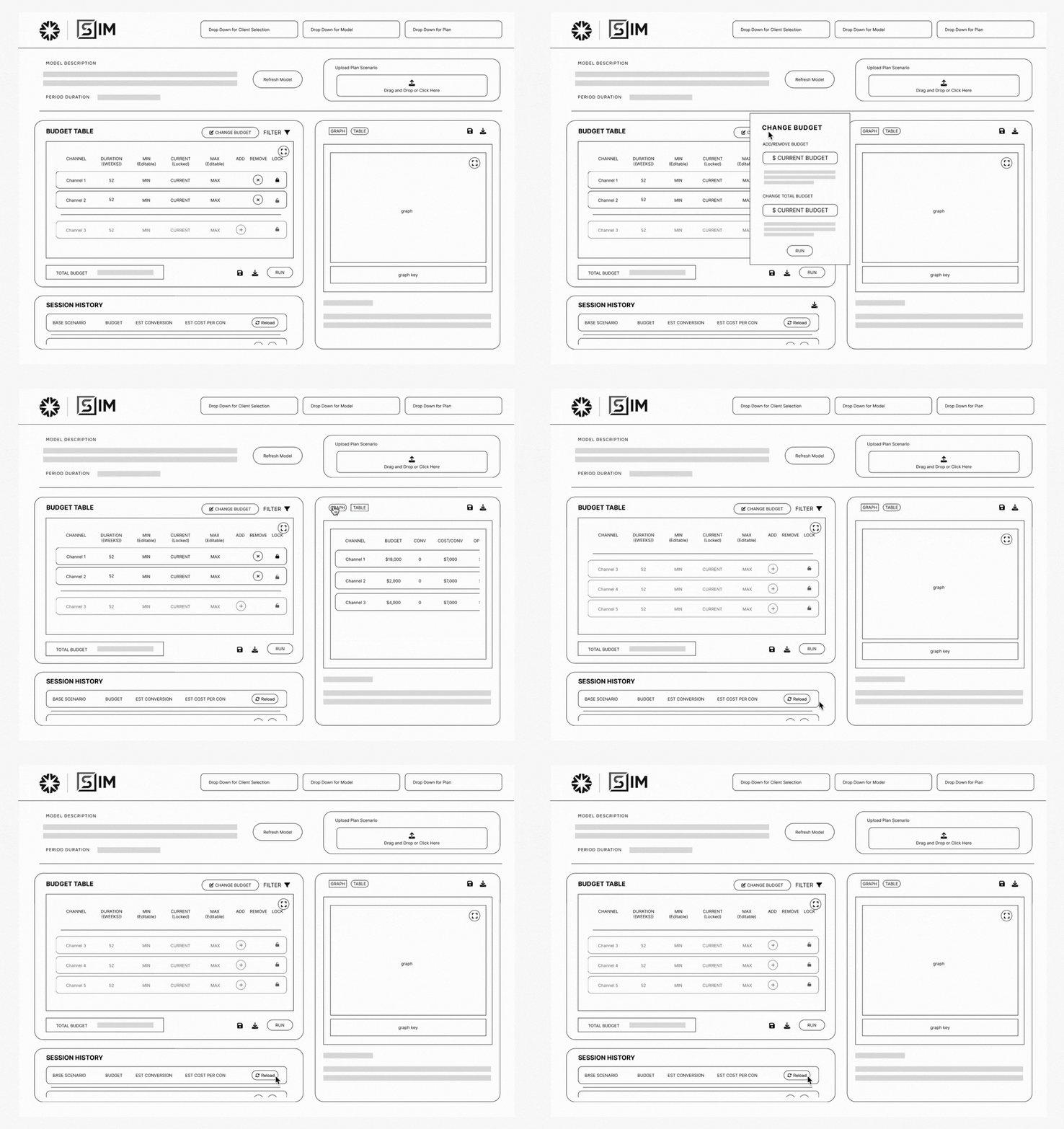
Rather than proposing a full redesign, I focused on introducing scalable design patterns that could be applied incrementally. Key areas of focus included:
Clarifying data hierarchy to help users quickly understand what required action versus what was informational
Improving labeling and terminology to reduce reliance on tribal knowledge
Standardizing task flows across scenarios to create predictability and reduce mental overhead
Throughout the process, I partnered closely with engineering to ensure proposed changes aligned with existing architecture and could be implemented without derailing active development work.
Impact + Outcome
The resulting design approach:
Streamlined the budgeting and scenario-planning experience, making it easier for users to complete tasks end-to-end within the platform
Reduced reliance on external tools by bringing clarity and structure back into the core workflow
Established a more consistent, accessible foundation that could support broader internal adoption and future expansion
Just as importantly, the work created shared alignment around usability standards and design principles that informed subsequent roadmap decisions.
Reflection
This project reinforced the value of incremental design change in complex enterprise systems. By focusing on clarity, consistency, and user mental models, rather than surface-level UI updates, I was able to improve usability while respecting technical and organizational constraints.
If revisiting this work today, I’d explore earlier validation with less-experienced users to further stress-test assumptions around learnability as the product scaled.